No matter how hard you wish for it, some dreams will never come true.
David Pugliese still isn’t a Russian spy.
Some weeks ago while I was meeting with my own KGB handlers in Europe enjoying a holiday, Jesse Brown emailed me with questions about David Pugliese. I only read the email after I had returned home, at which point Jesse had already recorded and posted his Canadaland episode “The Curious Case of David Pugliese.”
I recently had some free time and listened to the episode, and I don’t think that my answers to Brown’s questions would have changed his editorial direction. On the whole, Brown doesn’t arrive at any particular conclusion. Indeed, the allegation that David Pugliese is some kind of Russian intelligence asset is curious, but not for any of the reasons Brown brings up in his podcast.
What’s curious is that it became a news story in the first place—there’s no substance whatsoever to the allegation against David Pugliese—and curiouser still that anyone’s talking about it as though the allegation ever had merit to begin with.
What Brown did examine was hopelessly tangential to the facts of the matter, but I’ll dissect this later on. I don’t think it was Brown’s intention, but the fact that he and the Canadaland team came up with nothing is in and of itself quite telling. Perhaps too is the fact that, despite having nothing, they turned it into a podcast anyways.
Never let a lack of facts get in the way of a good story, evidently.
Dumb Watergate
In case you have no idea what I’m talking about, a very quick summary.
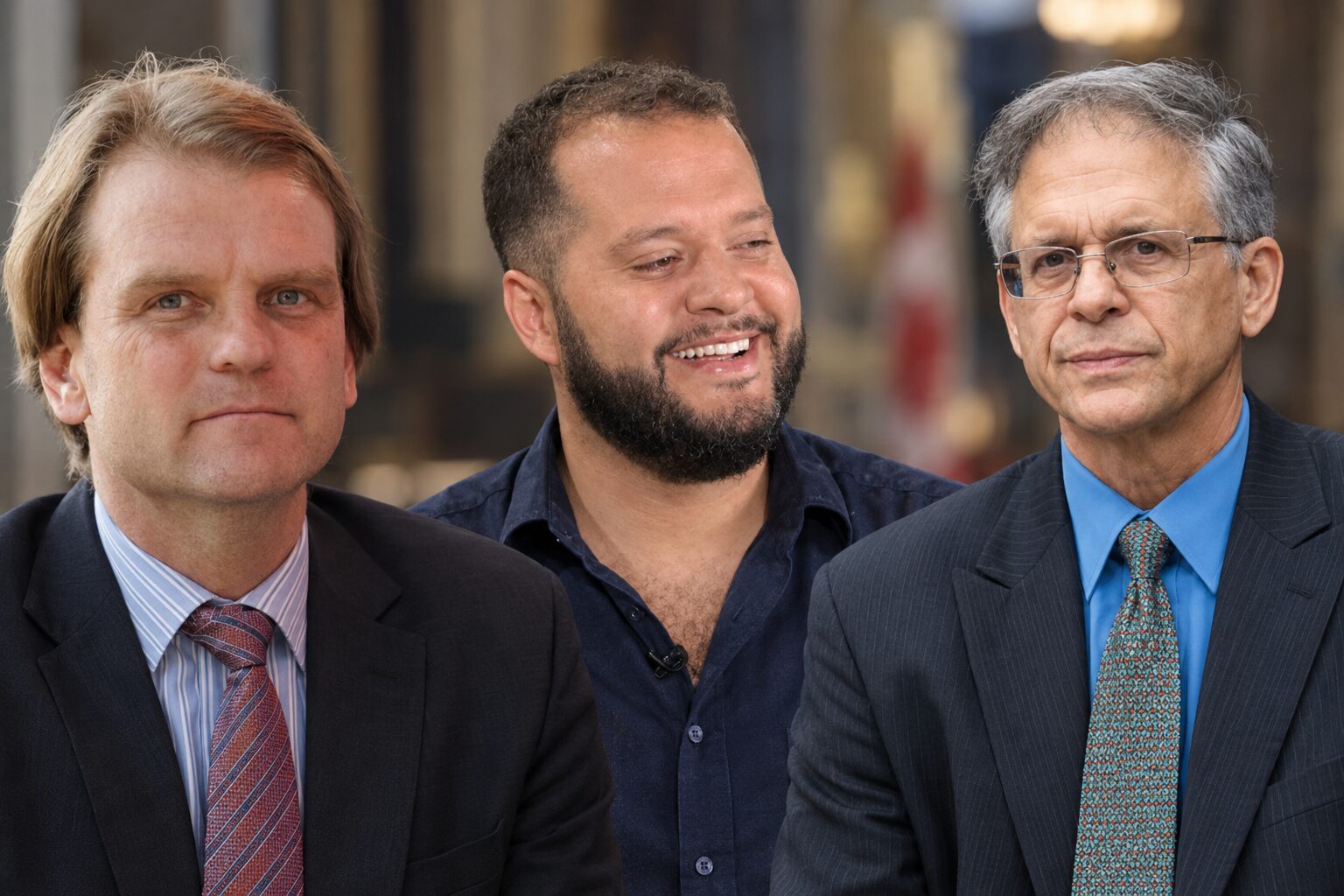
Just about two years ago, on October 24th 2024, former cabinet minister Chris Alexander appeared before the parliamentary security committee (SECU) and alleged veteran Ottawa Citizen reporter David Pugliese is a Russian intelligence asset. He said Pugliese advanced Kremlin narratives and that he had in his possession documents indicating a KGB effort to recruit Pugliese going back to the 1980s.
The evidence Alexander provided was a computer printout that included colour scans of seven pages he alleged were KGB documents, along with translations in French and English. The scans of the alleged documents would be published online weeks later.
I watched Alexander’s testimony, took notes of what he said, and then read the various articles that came out about it afterwards. The fact that Chris Alexander would not step out from behind parliamentary immunity and make his statement publicly (where he could be held liable for defamation), confirmed my gut reaction that this was all a gigantic steaming crock of shit.
Now while I have kept on this story for the last two years, it’s not because I’m a member of a Pugliese Defence Brigade. Rather, I think the real story here is how a politician can present himself as an expert, make an extraordinary allegation against a journalist, face zero scrutiny from politicians tasked with investigating matters of national security, be completely shielded from any accountability by the apparatus of government, and then get an assist from Canada’s extremely lazy “both sides of the story” establishment media.
In other words, my interest here lies more with piss poor Canadian journalism, and our wholly unaccountable political class, than any alleged KGB effort to recruit David Pugliese as an intelligence asset 40 some odd years ago.
As I later detailed in my first article on the subject (published in The Walrus in October of 2025), there were many reasons why Alexander’s assertion is ludicrous.
First, Pugliese has had a long career with the Ottawa Citizen and, in that capacity, has had access to Cabinet ministers, top officials with the Canadian Forces, the Department of National Defence, and Canadian intelligence. He has also travelled to Afghanistan to report on Canada’s military intervention there. All of which either requires extensive security background checks or would otherwise invite the scrutiny of military and intelligence professionals whose job it is to know precisely who they’re talking to. Unless the entirety of Canada’s security and intelligence establishment is completely incompetent—and has been for several decades—it is highly unlikely Pugliese would have passed these background checks and flown under the radar for so long.
It is also highly unlikely such a secret could have been kept for this long. If Pugliese was supposedly advancing Kremlin narratives, why isn’t this apparent in any of his reporting from the 1980s or 1990s? Arguably, it mattered much more back then—when the Soviet Union and international communism was collapsing—than today, when Russia is barely holding on to a prolonged stalemate against an adversary they clearly underestimated.
Based on his recent reporting, it appears that Pugliese’s still passing security background checks, irrespective of Chris Alexander’s charges against him.
Furthermore, Postmedia still employs Pugliese in his role as a leading defence reporter. If Pugliese was truly suspected of being a Russian intelligence asset, Postmedia wouldn’t still be paying his salary. If Postmedia had any serious doubts, they would have hired private investigators to track Pugliese and scour Ukrainian archives. That doesn’t appear to have happened.
If Pugliese genuinely was suspected of being an intelligence asset for as long as Chris Alexander has suggested, why hasn’t this led to a formal criminal investigation? Is CSIS and/or the RCMP just biding their time, waiting to spring their trap? If so, didn’t Alexander seriously undermine such a hypothetical investigation with his testimony?
Moreover, given Pugliese’s penchant for adversarial reporting, had there been even the slightest suspicion of Pugliese’s alleged treachery in Canadian defence, security, and intelligence circles—or amongst former Cabinet ministers (or even other reporters working the defence beat for that matter)—I can’t imagine anyone would have sat on this story for as long as they all (allegedly) have. As I reported for The Walrus, Canada’s defence department (DND) put Pugliese under investigation back in 2013 after falsely accusing him of publishing classified information (it was actually pulled from a US Navy press release). And according to the independent Canadian military magazine Esprit de Corps, DND made three separate attempts to convince Pugliese’s editors to pull him off defence reporting (which, to their immense credit, they resisted).
In other words, if there was long a suspicion about Pugliese, as raconteur Justin Ling has alleged, it would have come out some time ago, and certainly not in the context of a nervous ex-Cabinet minister answering softball questions at a parliamentary committee meeting being broadcast on CPAC. We would have learned about it at a joint RCMP/CSIS press conference, broadcast by all the major networks, after Pugliese had been arrested, and the evidence would be a hell of a lot stronger than seven photocopies for which the originals apparently can’t be found and/or which no one has actually ever seen before.
Does the case merit further investigation? Absolutely. Is it because the evidence presented to date is so compelling? Not at all.
The reason this story hasn’t gone in the direction its boosters in Canada’s political and media circles wanted, I suspect, is because no additional information has surfaced indicating Pugliese is anything other than an Ottawa Citizen defence reporter. There’s plenty of information about the how, why, and whom of this case, but it doesn’t quite point towards a major international conspiracy, and certainly doesn’t further implicate Pugliese.
I can’t recall whether I or a colleague came up with it, but the term “dumb Watergate” comes to mind.
Canadaland Comes Calling
In any event, Jesse Brown had two questions for me:
First, was I merely a signatory of the open letter in Pugliese’s defence, or had I a role in writing and circulating it.
Second, whether I was aware of an apparent practice of creating digital replicas of intelligence files, which in turn could potentially explain the use of fonts created after the breakup of the Soviet Union in the alleged KGB files used to implicate Pugliese.
It is for all the reasons listed in the section “Dumb Watergate” above that I wrote the open letter in defence of David Pugliese, circulated it amongst some of the very finest journalists in Canada, and published it in The Maple (and a few other places too). I have told every editor who has commissioned my articles investigating this story that I wrote the open letter. It was posted under The Maple’s managing editor Alex Cosh’s byline on their website only to distinguish it from my reported work.
As to the second question, yes, I am aware of this practice, but it has no bearing on this case. The alleged KGB files do not implicate David Pugliese. If we assume the documents are legitimate, there’s nothing in them to suggest Pugliese was successfully recruited, nor even aware of the recruitment effort.
This is a point worth emphasizing, as it is only because of Chris Alexander’s rather extraordinary mental gymnastics that alleged files detailing an inconclusive KGB recruitment effort (for which the supposed subject was apparently unaware) manifests—forty years later mind you—in the form of critical reporting on matters relating to Canada’s support of Ukraine and/or the presence of Ukrainian Nazis in Canada.
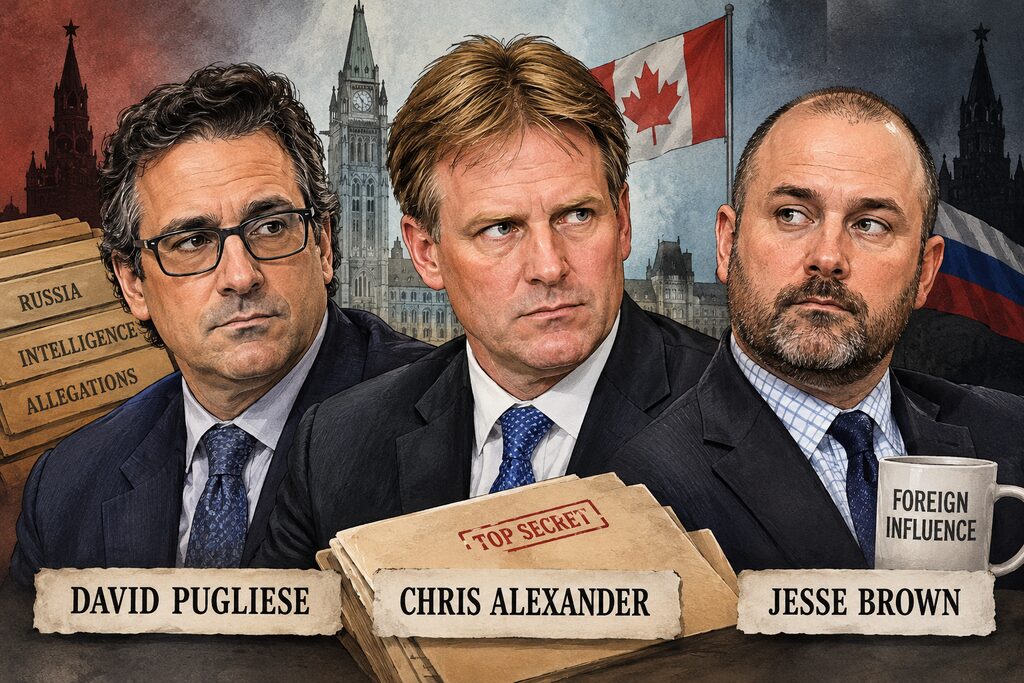
A sleeper agent, recruited by a union of socialist republics presenting itself as the first post-national state, then sprung into action four decades later to advocate on behalf of the gangsters of capitalism in their punitive nationalist war against what was once a vital component of the Soviet Union.
If you believe that, I have a bridge to sell you.
That matter notwithstanding, if the alleged documents were in fact digitally manipulated, whoever circulated them to Chris Alexander would have had to have told him so. Because, as evidence, they’re basically useless. If a document can be manipulated digitally to make them clearer or more legible, they can also be manipulated into becoming something else entirely.
But this doesn’t matter, because there’s other far more compelling evidence for why Chris Alexander’s photocopies are bunk.
As I detailed in my second article on this subject, also published by The Walrus, Giuseppe Bianchin, an Italian automotive sector engineer, conducted an independent forensic examination of Chris Alexander’s photocopies. Bianchin’s conclusion is unambiguous: the files are elaborate forgeries.
Is Bianchin an expert on KGB files? No. Did he pretend to be? Also no. Bianchin was forthright and sincere when answering my questions, and appears to be a curious person who, by his own admission, fell down the rabbit hole of Chris Alexander’s outrageous, extraordinary, and wholly unbelievable claims. Bianchin claimed no expertise in his report, and further noted it was not peer reviewed.
But a lack of formal training or expertise in a given field doesn’t preclude an individual from asking questions and thinking logically. I was disappointed with Brown’s attempt at undermining Bianchin’s conclusions by criticizing him for taking an online course about KGB documents. Bianchin volunteered this information when I initially interviewed him and explained it was simply to satisfy his curiosity, not to claim expertise.
Bianchin never claimed to be an expert, but he knows how to send them an email. He corresponded with several, including a leading Italian forensic graphologist, Germany’s leading typographical expert, and the Dutch typeface designer who designed the digital font FF Trixie — the one you may recognize as the ‘X’ in The X-Files television program — which was also used throughout the alleged KGB files.
It was the graphologist who determined that one hand had written all the handwriting throughout the alleged KGB files, even though they were supposedly written by different people, in different places, and at different times. The font designer immediately recognized his own work. And the typographical expert confirmed the font was digital. The latter point is important because the FF Trixie font was only created after the end of the Soviet Union, and therefore wouldn’t have been available to alleged KGB agents typing up reports in the 1980s or very early 1990s.
Another point regarding Brown’s second question: the alleged files were never found in Ukraine’s KGB archives. Global News reached out to them in their first report on the subject, and the response was clear they couldn’t find any trace of the alleged documents. Whether they were digitally manipulated or not doesn’t matter if originals can’t be found in the one place that would be certain to have them.
But now I have a question for Jesse Brown:
Did you ask either Chris Alexander or Mitch Leedham (the guy suing David Pugliese for this 2023 Ottawa Citizen article) where they got these alleged KGB photocopies from?
Because Chris Alexander didn’t present original documents to the security committee, and it’s not clear if he ever had real documents in his possession.
Talkin’ Loud and Sayin’ Nothing
There are a few other holes in the Canadaland piece. Brown says that I wrote “Alexander was running a smear job against Pugliese, one that was motivated by hostility.”
This is inaccurate.
The title of one of the two articles I wrote for The Walrus does use the word “smear”, but I didn’t claim Alexander was “running a smear job against Pugliese” specifically. I leave open the distinct possibility Chris Alexander is an idiot who may be particularly useful to other people seeking to smear Pugliese. I also didn’t write that Alexander was motivated by hostility, but noted what I felt was Alexander’s hostility towards journalists. These are important distinctions.
Brown further states that “readers were told (Alexander) was getting revenge against a journalist who had repeatedly embarrassed him.” That’s one way to interpret my article, but again, I never actually said that. Again, there’s a distinct possibility that Alexander, while not completely innocent, was manipulated himself.
I gave Alexander ample opportunity to tell his side of the story. Rather than responding to my questions, he instead sent a long email to Walrus editor in chief Carmine Starnino, attempting to dissuade him from covering this.
Brown also leans heavily into whether Pugliese was living in Ottawa at the time. As he told The Walrus, claims in the alleged files that he was living in Ottawa in 1984 and 1988 are false. Brown stated that he confirmed Pugliese graduated from Carleton University’s journalism program in 1986.
In case you’re wondering, 1986 was not 1984 or 1988, they were all different years (I remember them well!)
What Brown didn’t mention is that, in the mid-1980s, Carleton offered a one-year journalism diploma to students who had already completed undergraduate degrees elsewhere. In other words, it is entirely possible Pugliese was living in Ottawa in 1985-86 (years specifically not mentioned in the alleged KGB files), and elsewhere before and after.
As to Brown’s discovery of a handwritten “D. Pugliese” in a Niagara Falls visitor’s log, posted online, and indicating a 1982 Ottawa address… all I can say is Deborah, Donny, Dan, Danny, Daniel, Danielle, Daniella…
I’d love to see this evidence tested in court but it would be hard to hear the lawyers over the laughing of the judge.
As to Brown’s other claim, that Pugliese was in fact working for the Ottawa Citizen earlier than he had previously mentioned, I too would make a distinction between what I do on a freelance basis and publications who are paying my salary. I don’t work for The Walrus, they occasionally publish my work and I’m credited as an independent journalist. And for the record, Pugliese’s byline appears in newspapers all over Canada during the period 1985-1988: the North Bay Nugget, the Hamilton Spectator, the Edmonton Journal. This is what an early career reporter’s CV looks like.
Most significantly, in the April 29th, 1988 edition of the Burlington Spectator, David Pugliese is listed as one of the winners of the C.B. Schmidt Award for Novice Reporters.
The newspaper he’s associated with? The London Free Press.
I don’t know where David Pugliese was living in 1984 and 1988, the two dates the alleged KGB files suggest he was living in Ottawa, but I do know that he’s told me this is false. That was an on the record statement, which is more than Chris Alexander has ever made on this subject. The two dates Jesse Brown found—1982 and 1986—are not the dates on the alleged KGB files.
And even if they were, it still wouldn’t change the fact that the alleged files don’t actually implicate Pugliese in anything at all.
Drawing Conclusions
I listened to the whole episode and I kept waiting for some new information that would discredit what’s already been established, or provide a new angle to mine for additional details, but nothing came of it. Where Jesse Brown did try to dig, he didn’t turn up much. The questions he doesn’t appear to have asked, by contrast, speak volumes. He leaned heavily into his conversations with Pugliese—at least in terms of teasing the listener through the show—but these ultimately didn’t lead anywhere either, except to let us know Pugliese seems to have found Brown’s questions irritating. I did too. Brown wasn’t bringing much to the table, and it seems like he’s relying a lot on what Mitch Leedham told him.
But here again Brown doesn’t ask a basic question, such as asking Leedham what’s the status of his lawsuit against Pugliese. It’s been going on for some time now, but there doesn’t appear to be any movement whatsoever. This strikes me as peculiar for a complainant, given Leedham’s the one alleging Pugliese defamed him. Pugliese’s reporting on the Mriya Aid scandal—all of it—remains published and uncorrected on the website of the Ottawa Citizen. I’m not a lawyer, but if I retained counsel and initiated a lawsuit against a reporter for libel, I wouldn’t wait to have my day in court. I’d try to get it sorted as quickly as possible, in order to correct the record and clear my name as close to the date the libelous statements were first published.
That’s what I would do if my goal were to win a libel case against me.
But if that wasn’t my goal, if my goal were to silence a critical reporter, one potential option would be to initiate a defamation lawsuit and delay going to court in the hope that the reporter’s risk and cost averse employer try to settle. It’s a bit of a Hail Mary play, but given how Canadian journalists are often treated by news media corporations, it wouldn’t be completely unreasonable to think such a strategy might work.
For the record, I do not believe Chris Alexander’s allegation against David Pugliese. No evidence has been presented to make me believe any part of his statement, and I’ve not uncovered any new evidence to support the allegation either.
But more importantly, no one else has, and it’s been two years.
No new evidence, no supporting evidence, no investigations, no criminal charges, and the parliamentary security committee hasn’t revisited the matter since December of 2024.
Curious indeed.
Leave a Reply